I Painted My AI Tutor's Second Eye Only After Passing Every Practice Test — Here's What a Daruma Doll Knows About Motivation That Streaks Don't
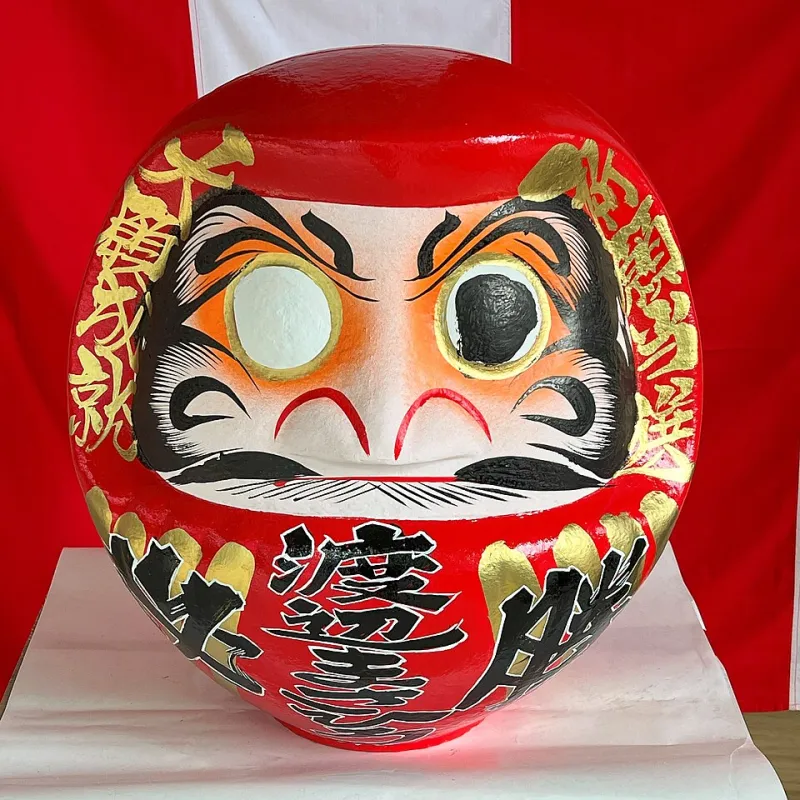
Photo: Asanagi, CC0, via Wikimedia Commons
There's a daruma doll sitting on my desk right now, and it's staring at me with one eye.
That's not a defect. That's the whole point. In Japan, when you set a goal, you paint in the first eye. The second eye stays blank until you've actually accomplished the thing — passed the exam, closed the deal, finished the marathon. The doll watches you work with half a face until you've earned the rest of it.
I've been a serial quitter of study apps. Duolingo streaks, Anki chains, fitness-ring-style completion circles — I've abandoned all of them, usually around day eleven. So this semester, before diving into MCAT prep (yes, I'm one of those people now), I decided to run an experiment: what if my AI study tracker worked like a daruma instead of a video game?
The Problem With Points
Here's my theory, which I'll defend until someone smarter tells me I'm wrong: streaks reward showing up, not finishing. A streak counter doesn't care whether you passed your practice test. It cares that you opened the app. That's a participation trophy wearing a productivity costume.
The daruma is different. It's all-or-nothing. There is no partial credit, no little animation when you hit day 30. There's just: goal done, or eye still blank.
Psychologists have a name for this kind of thing — a commitment device. It's the same reason people freeze their credit cards in blocks of ice or sign up for marathons months in advance. You make the finish line real and visible before you start, so the version of you at mile 18 can't quietly renegotiate the deal.
Most AI study apps, in my experience, do the opposite. They're built to keep you engaged, which sounds nice but is actually a softer target. Engagement is easy to fake. Completion is not.
The Experiment: A Chatbot With One Eye
So here's what I actually did. I set up my AI study assistant (a chatbot, nothing fancy) with a single instruction: it was allowed to celebrate nothing except completed practice-test benchmarks.
Every time I scored 70% or higher on a full-length practice exam — which was my self-defined milestone for MCAT readiness — I'd log the score, and the bot would "paint" one eye of a digital daruma it was keeping in our chat. My plan had six benchmarks: three practice tests, then the real thing broken into two phases, then the actual exam date.
The bot, to its credit, played along beautifully. When I asked it to congratulate me for a 45-minute study session, it would respond with something like: "Noted. The daruma remains half-blind."
Rude? A little. Effective? Also a little.
What Changed
Three things happened over the semester that I did not expect.
First, my sessions got shorter but meaner. Without streaks to farm, there was no incentive to do 20 minutes of low-effort flashcards just to keep the number alive. I stopped padding. When I studied, I studied the weak areas the AI had flagged, because that's what actually moved me toward a benchmark. My average session dropped from about 90 minutes to about 55, and my practice scores climbed faster.
Second, failure became information instead of shame. In streak-world, breaking a chain feels like losing progress — the counter resets to zero and all your work evaporates. In daruma-world, a failed practice test just means the eye stays blank. Nothing was erased. The doll didn't punish me; it just kept waiting. That's a weirdly kind form of accountability.
Third, the final milestone hit differently. When I walked out of my actual exam in April, the first thing I did in the parking lot was open the chatbot and paint the last eye. And I'll be honest — I felt something. Not because a confetti animation played, but because I'd made a promise to a one-eyed doll four months earlier and finally honored it.
How to Steal This for Yourself
You don't need to know anything about Japanese folk tradition to use this. Here's the recipe:
- Pick a goal with a hard edge. "Study more" is not a goal. "Score 1500+ on the SAT by October" is.
- Break it into 3–6 all-or-nothing benchmarks. Practice tests work great because they're objective. A benchmark is either hit or it isn't.
- Tell your AI the rules. Something like: "Only acknowledge completed benchmarks. If I ask for credit for anything else, remind me the eye is still blank."
- Make the progress visible. A saved image, a note pinned to your home screen, an actual paper daruma if you want the full experience. Visibility is the mechanism.
- Never reset. Failed benchmark? The eye stays blank. Try again. The doll is patient.
The Takeaway
AI study tools are genuinely good at the parts of studying that used to eat all your time — generating questions, tracking weak spots, explaining things at 2 a.m. when your professor is asleep. What they're bad at, by default, is making finishing matter.
That part you have to build yourself. And apparently, a 200-year-old good-luck doll figured out the design before Silicon Valley did.
Fill in the second eye only when it's earned. Everything else is just a streak waiting to break.