Thirty Mornings, Thirty Wishes: What Happened When I Turned a Chatbot Into My Exam Shrine
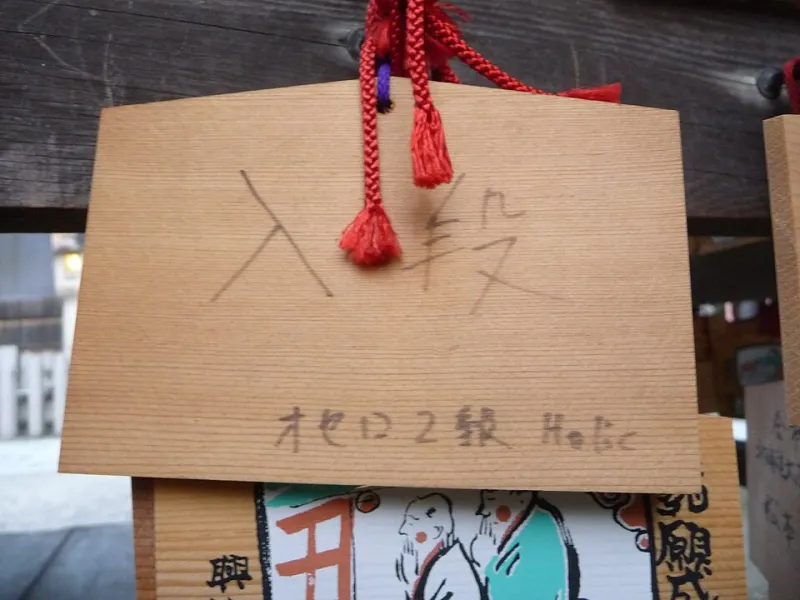
Photo: Immanuel Giel, CC0, via Wikimedia Commons
Every spring at Tokyo's Meiji Shrine, you'll find rows of small wooden plaques hanging from racks, swaying in the breeze. They're called ema — literally 'picture horses' — and students buy them, write a wish on the back ('Please let me pass the entrance exam'), and leave them for the gods.
Here's what struck me the first time I saw them: the wish is specific. Not 'I want to do well.' It's 'I will pass the chemistry certification exam in February.' The act of writing it down, in ink, on wood, forces clarity.
Meanwhile, back in the US, my motivation strategy was opening a motivational quote app, feeling vaguely inspired for four minutes, and then scrolling Instagram. So I wondered: what if the ema ritual and an AI chatbot had a baby? What if I wrote my exam wish into a chatbot every single morning, and instead of a silent shrine, I got something back — a plan, a nudge, a mission?
I ran the experiment for 30 days while prepping for a certification exam. Here's how it went.
The Setup: Turning a Chatbot Into a Wishing Wall
The rules were simple. Every morning, before touching any study material, I'd type my exam goal into a chatbot — stated in the present tense, like an ema plaque — along with a one-line status update from yesterday.
The first prompt I used looked like this:
You are my exam shrine. I'm going to write my goal here every morning like a Japanese ema plaque. Save my goal and my daily check-ins. My goal: I pass the [exam name] on [date] with a score of [target]. Yesterday I completed: [one line]. Today, give me ONE concrete study mission I can finish in 90 minutes, based on my weakest areas. Keep it short. No pep talks.
That last line matters. I did not want a cheerleader. I wanted a priest who hands you a broom and points at the floor.
After the first week, I added a second instruction: track my streak and summarize my last seven check-ins every Sunday. That's where the AI started pulling ahead of any actual shrine, or any quote app, because it remembered. Day 12's mission was shaped by a throwaway complaint I made on Day 5 about forgetting formulas. A wooden plaque can't do that.
Week One: It Felt Ridiculous (It Was Supposed To)
Typing a wish into a chatbot felt goofy for about three days. Then something interesting happened: the silliness became the point.
The ritual itself is a behavior-design trick. The ema tradition works not because gods grade exams, but because writing the wish makes the goal concrete and public, even if the only witness is a piece of wood. Psychologists call this implementation intention — stating not just what you want, but what you'll do about it. My morning message did exactly that, with a built-in receipt: 'Yesterday I completed: two practice sets on rotational motion.'
Some mornings that line was embarrassing. 'Yesterday I completed: nothing, I fell asleep at 9pm.' The chatbot didn't scold. It just adjusted the mission down to something smaller. That non-judgment turned out to be crucial — I never skipped a morning, because I never dreaded the reply.
Week Two: The Missions Got Weirdly Specific
By the second week, the daily missions stopped being generic ('review chapter 5') and started feeling like they came from someone who'd been reading my diary. When I mentioned rushing through a practice test, the next mission was: 'Retake questions 3 and 17 slowly. Explain each answer out loud in two sentences before checking the key.'
That's the part a motivation app can't replicate. Streak counters and confetti animations treat every day identically. The chatbot was treating my days differently based on what I told it — which is the whole game when you're studying for something hard and lonely like a certification exam or the MCAT.
The Copy-Paste Version (Steal My Shrine)
If you want to try this, here's the fuller template:
Act as my daily exam shrine, inspired by Japanese ema plaques. Rules:
- I'll check in every morning with my goal and yesterday's result.
- Remember every check-in. Track my streak.
- Give me ONE mission per day, max 90 minutes, targeting my weakest area.
- On Sundays, summarize my week: what I did, what I'm avoiding, what to change.
- No motivational quotes. No emoji. Just the mission.
The 'no quotes' rule is non-negotiable, in my opinion. The moment the bot said 'Believe in yourself!' I'd have deleted the whole thing.
The Verdict: Did the Wishes Come True?
Candidly: the chatbot didn't raise my practice scores directly. Studying did. On Day 30, my practice test score was up about 9% from my Day 1 baseline.
But here's the honest attribution: before this experiment, my study streaks averaged maybe four days before collapsing. This time I hit 30 consecutive check-ins and 26 actual study days. The daily wish — specific, witnessed, remembered — was the difference. The ema tradition survived centuries for a reason. It just needed an upgrade that could remember what you did yesterday.
Hang your wish on a wooden plaque if you like. But hang it somewhere that talks back.