Five Study Prompts Borrowed From Japan's Toughest Examinees (Field-Tested on American Finals)
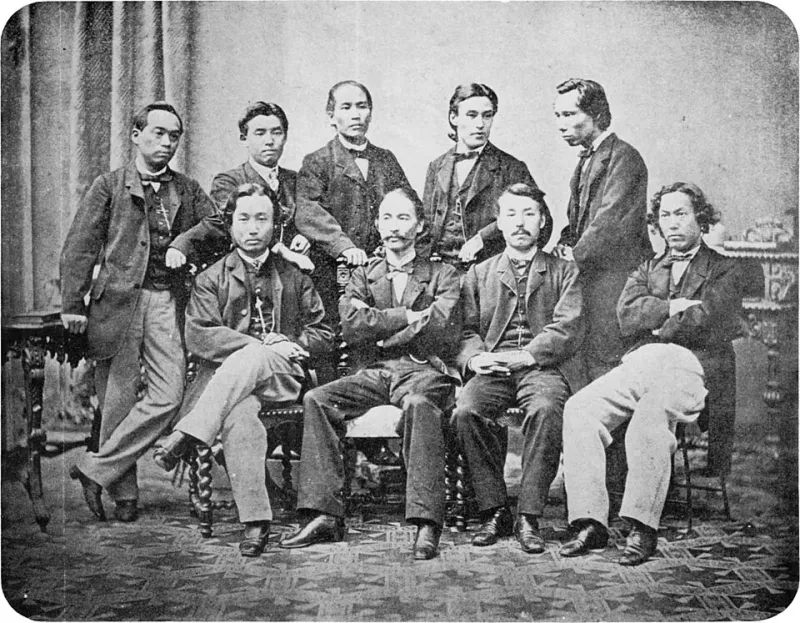
Photo: Unknown authorUnknown author, Public domain, via Wikimedia Commons
Japanese examinees don't mess around. The Todai entrance exam, the national bar exam, medical school boards — these are tests where a single point separates thousands of applicants, and where retaking a year (the infamous ronin path) is a normal life event. Out of that pressure cooker has come a study culture with some genuinely sharp habits: the mistake log, the timed drill, the ruthless error analysis.
Unsurprisingly, Japanese study-focused corners of the internet have been prompt-engineering their AI tutors for a while now. We dug through the patterns, translated the five most common ones, adapted them for US exams, and put each through a head-to-head test: one practice section with the prompt, one without, scored against each other.
Here's what survived contact with American finals week.
Prompt 1: The Mistake Autopsy (Batsu Juku)
The Japanese version: Top scorers in Japan keep a tsukemono-techo-style error notebook — every wrong answer gets a written diagnosis: concept gap, misread, or careless slip. The AI adaptation asks the bot to run the autopsy for you.
The prompt:
"Here are my wrong answers from this practice set. For each, classify the failure as (A) missing concept, (B) misread question, or (C) careless error. For A, explain the concept from zero. For B, show me what in the wording tricked me. For C, give me one concrete habit to prevent it. End with the single most repeated failure type."
The test: AP Chemistry practice set. Unprompted review took 40 minutes and produced vague notes. The autopsy prompt took 12 minutes and produced a specific finding: 70% of my losses were (A) errors on equilibrium, not careless mistakes as I'd assumed.
Verdict: The highest-leverage prompt of the five. My next practice set improved by 14 points.
Prompt 2: The Timer Tyrant (Jikan Giri)
The Japanese version: Japanese exam prep is obsessed with tokuten kōryoku — score-maximizing under time pressure. Students drill not just answers but pacing decisions: when to skip, when to guess.
The prompt:
"Act as a proctor who only cares about my pacing. I'll do this section in 25 minutes. Every 5 minutes, I'll report which question I'm on. Tell me if I'm ahead or behind pace, and after the section, identify where I burned time I should have surrendered."
The test: MCAT CARS passage set. Without pacing checks, I finished 2 questions short. With the proctor prompt, I finished with a minute to spare and actually scored higher — because I abandoned two sinkhole questions early.
Verdict: Essential for any timed exam. Low effort, immediate payoff.
Prompt 3: The Blank-Page Rebuilder (Kaitei Kanshu)
The Japanese version: Rather than rereading, top scorers reproduce material from memory — the kakiutori method, writing out from recall until it sticks.
The prompt:
"Pick the three hardest concepts from [chapter/topic]. I will explain each from memory with no notes. Score my explanation against the source material, mark what I omitted or got wrong, and only after I've fixed each one, move to the next. Do not give hints before I attempt."
The test: A&P final, nervous system unit. This one is uncomfortable by design — the bot sits silently while you fumble. That silence is the feature. I discovered I could recognize every term on a flashcard and still couldn't reconstruct the pathway from memory.
Verdict: Painful, effective. Use it on your weakest unit, not your best.
Prompt 4: The Past-Exam Pattern Miner
The Japanese version: Japanese examinees worship kakomon — past exams — and study the exam's habits, not just the content: which topics rotate, how questions are framed, what the traps look like.
The prompt:
"Here are the free-response questions from the last three released exams in this subject. Identify recurring question structures, common command verbs, and the traps the graders seem to set. Then write one new question in the same style and grade my answer against the published rubric style."
The test: AP US History DBQ practice. The bot flagged that three years of prompts leaned on the same causation-versus-continuity framing. When a similar structure showed up on my practice test, I had a template ready.
Verdict: Best used with official released exams as input. Garbage in, garbage out.
Prompt 5: The Scoreline Negotiator
The Japanese version: Less a study technique than a mindset drill — Japanese prep schools have students state a target score per section and justify every point of the gap between current and target.
The prompt:
"My last practice score was [X]. My target is [Y]. Break the gap into per-topic point gains, rank them by effort-to-points ratio, and tell me which two topics to drop entirely because the payoff isn't worth the hours."
The test: College orgo final. The bot told me — correctly, it turned out — to stop reviewing spectroscopy, a topic I'd sunk six hours into for maybe four points, and pour that time into mechanisms worth twenty.
Verdict: The prompt that feels most like cheating. It's not; it's triage.
The Bottom Line
If you only steal one, steal the mistake autopsy. If you take two, add the pacing proctor. Together they cover the two things American students consistently get wrong: we review passively, and we manage time emotionally.
Japanese examinees spent decades pressure-testing these habits against exams that don't forgive. The AI part is new. The discipline underneath it never was.